
BBC reports: A pregnant woman (12 years old) and her unborn child died in Yemen during childbirth.
غير مصنف 14 October 2009

BBC reports: A pregnant woman (12 years old) and her unborn child died in Yemen during childbirth.

Poverty, ignorance, and illiteracy are the causes of the crisis A 12-year-old girl and her unborn child died in Yemen due to a complicated childbirth, according…

BBC reports: A pregnant woman (12 years old) and her unborn child died in Yemen during childbirth.
14 October 2009 غير مصنف motive
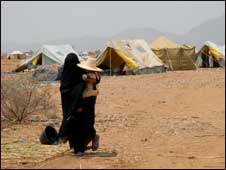
Displaced from Saada due to the war

Poverty, ignorance, and illiteracy are the causes of the crisis

A 12-year-old girl and her unborn child died in Yemen due to a complicated childbirth, according to the child protection organization “Siyaj”.

Siyaj stated that the girl, Fawzia Abdullah Youssef, who Forced into early marriage, a girl died on Friday in western Yemen from childbirth complications after doctors were unable to save her.

The organization said the girl, who grew up in poverty with a father suffering from kidney failure, was forced into marriage at the age of 11 and became pregnant the following year.

The organization stated that the lack of laws setting a minimum age for marriage makes it difficult for local officials to prohibit child marriage, especially for girls, or to punish parents or husbands for the potentially disastrous consequences of such marriages.

Ahmed al-Qurashi, director of the organization Seyaj, said, “Fawzia’s case illustrates the tragedy of what we call ‘brides of death’—girls, some as young as 15, forced into marriage, often for financial reasons.”

Al-Qurashi added that the rate of child marriage among girls under the age of fifteen in rural areas of the country is approximately 50%, and that these marriages stem from poverty, ignorance, and illiteracy, leading to the destruction of the lives of these girls whose opinions are disregarded.

The Najoud Case

Last year, a Yemeni court granted a divorce to an eight-year-old girl named Najoud after her unemployed father forced her to marry a man twenty years her senior, claiming he feared the husband would kidnap her.

Najoud’s case highlighted the suffering of many Yemeni girls forced into marriage.

Najoud

Her case highlighted the tragedy

Commenting on Fawzia Youssef’s death, lawyer Shatha Nasser, who represented Najoud in her divorce case, said, “This is a true tragedy, and the government bears the greatest responsibility for it because President (Ali Abdullah Saleh) has not yet issued the law (regarding the minimum age of marriage) that was adopted by Parliament last February.”

The lawyer added that the government must launch awareness campaigns in rural areas and prevent religious figures from officiating marriages for girls under the age of seventeen.

Nasser further stated that the authorities must also ensure that girls receive some level of education in a country where the illiteracy rate is estimated at 33.4% among men and 76% among women.

Since winning Najoud’s case, Shatha Nasser has been entrusted with representing a number of girls in similar circumstances, who have been encouraged to speak out about their situations because of Nasser’s success in the courts.

The lawyer also succeeded in winning a divorce case for another minor. (10 years old) Her name is Arwa.

Nasser says she is currently working on the case of a girl whose father married her off at the age of two because he needed her dowry. The marriage contract allowed the child to remain with her parents until the age of thirteen, at which point she was expected to be married.


News on BBC website

شارك رأيك

نرحب برأيك وتعليقك على هذا المقال. سيتم نشر التعليق بعد المراجعة.

بيانات المقال

التاريخ 14 October 2009
التصنيف غير مصنف
الكاتب motive

مقالات ذات صلة

عرض كل الأخبار
Conservation policy
غير مصنف
24 May 2026

Conservation policy

The safeguarding policy of the Siyaj Organization for Child Protection – Arabic This policy was developed based on Siyaj Organization’s belief in the importance of creating a safe working environment for all directly related parties, including direct and indirect beneficiaries of its humanitarian services, targeted groups, partners, service providers, volunteers, employees, and up to the<a href="https://seyaj.org/en/conservation-policy/">Continue reading <span class="sr-only">"Conservation policy"</span></a>

An assessment reveals that the majority of local and national humanitarian organizations lack “preservation” policies and procedures.
غير مصنف
24 May 2026

An assessment reveals that the majority of local and national humanitarian...

A recent assessment revealed that humanitarian organizations lack policies and procedures that protect their staff and beneficiaries from harm during the delivery of humanitarian assistance. According to the assessment results conducted by Siyaj Organization for Child Protection in cooperation with Tamkeen Youth Foundation, aimed at identifying the needs of civil society organizations working in the<a href="https://seyaj.org/en/an-assessment-reveals-that-the-majority-of-local-and-national-humanitarian-organizations-lack-preservation-policies-and-procedures/">Continue reading <span class="sr-only">"An assessment reveals that the majority of local and national humanitarian organizations lack “preservation” policies and procedures."</span></a>

An assessment reveals that the majority of local and national humanitarian organizations lack “preservation” policies and procedures.
غير مصنف
24 May 2026

An assessment reveals that the majority of local and national humanitarian...

A recent assessment revealed that humanitarian organizations lack policies and procedures that protect their staff and beneficiaries from harm during the delivery of humanitarian assistance. According to the assessment results conducted by Siyaj Organization for Child Protection in cooperation with Tamkeen Youth Foundation, aimed at identifying the needs of civil society organizations working in the<a href="https://seyaj.org/en/an-assessment-reveals-that-the-majority-of-local-and-national-humanitarian-organizations-lack-preservation-policies-and-procedures-2-2/">Continue reading <span class="sr-only">"An assessment reveals that the majority of local and national humanitarian organizations lack “preservation” policies and procedures."</span></a>