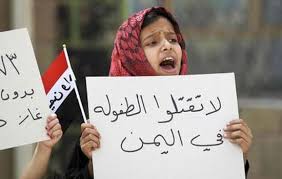
Yemen ranked 141st globally in children’s access to justice. [15.2.2016, London] Yemen ranked 141st globally in children’s ability to effectively access the courts to defend their rights, according to new research released by the Child Rights International Network (CRIN). The new report, titled “Rights, Remedies and Representation,” examines whether children can bring cases when their rights are violated. Their rights, the legal resources available to them, the practical considerations for taking legal action, and whether international law on the rights of the child applies in national courts. Yemen has ratified the UN Convention on the Rights of the Child, but it is unclear whether the Convention has the force of law. Several laws conflict with the Convention on the Rights of the Child, and the Convention has not been used in the courts. Children cannot bring civil or administrative cases in court to challenge violations of their rights except with the assistance of a parent, guardian, or representative, or through a lawyer appointed by the parent. Children’s testimony is not admissible in court, except in disputes between children. Legal aid is unavailable for children, and free assistance is limited. The judicial system and the rule of law in Yemen are weak due to frequent political interference in the judiciary and the problematic enforcement of judgments against certain authorities. There is no independent human rights institution to investigate complaints of child rights violations, although the law mandates the establishment of such an institution. Access to justice for children is a constantly evolving process; this report provides an overview of how children’s rights are protected worldwide. This report compiles findings from 197 country reports, written with the support of hundreds of lawyers and NGOs, aim to help countries improve children’s access to justice at the national level. CRAIN Director Veronica Yates says: “While this report highlights many examples of systems that are not fit to protect children’s rights, there are many people who are using the courts to effectively advance children’s rights. The ranking of countries shows the extent to which a country allows children access to justice, not the extent to which it respects their rights. However, it is difficult to ignore the number of countries with abysmal human rights records that ranked lowest in children’s access to justice.” UN Committee on the Rights of the Child Chair, Benjamin Dawit Mezmur, said in the report’s foreword: The Committee welcomes this research and has already begun to envision its tangible contribution to various engagements with States Parties. The standards of children’s rights enshrined in international conventions have little impact on the reality of children’s lives if they are not implemented, particularly when fundamental children’s rights are violated. It is therefore crucial that children, or their representatives, have the necessary resources, both in law and in practice, to stop and/or prohibit violations or obtain redress. He added, “I hope this study will mark the beginning of a new shift in prioritizing children’s access to justice, which will, in turn, enable the fulfillment of other rights.”