Lawyers and human rights activists agreed on the necessity for Yemen to enact national legislation criminalizing the recruitment and use of children in armed conflicts, including deterrent penalties for perpetrators of this serious violation, and to align all national legislation with relevant international conventions and treaties, most notably the Convention on the Rights of the Child, which the Republic of Yemen has ratified.
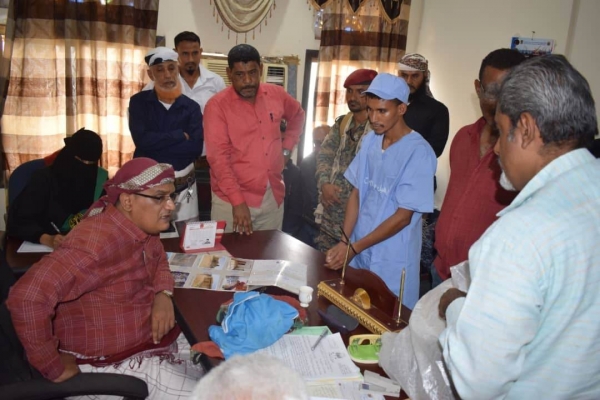
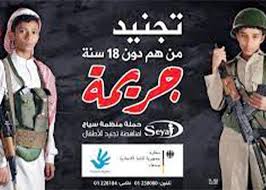
This resulted from a panel discussion held by the Seyaj Organization for Child Protection in cooperation with the Yemeni Bar Association on Saturday evening at Seyaj’s headquarters in Sana’a, as part of the “Combating Child Recruitment” campaign.
Legal experts, led by the head of the Yemeni Bar Association, Legal Advisor Abdullah Rajih, emphasized the importance of activating the role of media outlets and human rights organizations to reduce child recruitment and raise awareness of its dangers and the grave violations it entails for children’s lives, education, and safety, as well as the disastrous consequences for the future of children and Yemen in general.
Participants in the symposium, organized by Siyaj as part of a human rights campaign to combat the problem during the period from April to August 2012 and funded by the German government embassy in our country, emphasized the necessity of working with relevant government institutions and concerned international organizations to rehabilitate and demobilize child soldiers and find suitable alternatives to integrate them into education, vocational training, and the economy.
In his speech, the head of the Yemeni Bar Association, Abdullah Rajih, praised the role played by the Siyaj organization in combating child recruitment in Yemen, which he said is becoming more widespread every day amidst the absence of legal legislation regulating the work of security and military institutions or even the conditions for joining them, expressing the readiness of the Bar Association Lawyers will provide the necessary legal support to ensure the success of what “Siyaj” has begun in this regard.
For his part, Professor Ahmed Al-Qurashi, head of the Siyaj Organization for Child Protection, affirmed the organization’s determination to compile all the points raised in the discussion panel and formulate them, through a group of legal experts, human rights activists, and media professionals, into a proposal to be submitted to the relevant official bodies. This proposal aims to enact legislation criminalizing the recruitment of Yemeni children, with the participation of relevant civil society organizations.
In the legal working paper presented to the discussion panel, lawyer Abdul-Fattah Al-Qans concluded that Yemen is now bound by all international agreements and treaties ratified by the government, including those related to the use of children in armed conflict. The paper listed nine such agreements, which, according to the paper, requires the Yemeni government to align all its national laws with these agreements.
In his commentary on the working paper, Faisal Al-Majidi, head of the Support Center, stated that the discussion should have been more comprehensive regarding international agreements and treaties. He pointed out that the established international legal framework considers the recruitment and involvement of children in armed conflict to be a violation of international law. Armed conflicts are war crimes punishable by 30 years in prison, a sentence later reduced to 18 years by the International Criminal Court.
* By Ali Al-Awaridhi