

Al-Qurashi added: There are many tragedies of childhood in Yemen, but the most dangerous and painful is the execution of a child by a judicial ruling issued by an authority that is supposed to uphold the law, and carried out by the bullets of the security forces whose duty is to protect people’s lives, especially children’s.
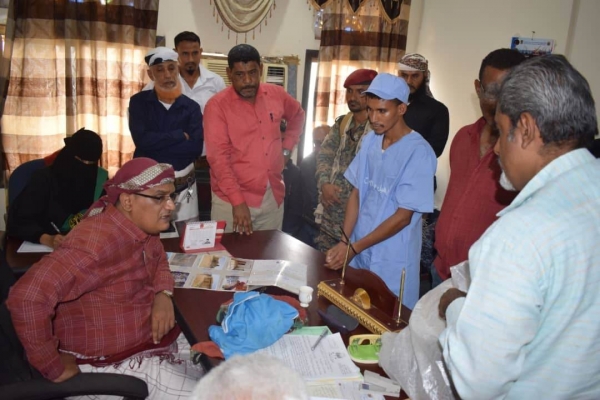
The head of the Siyaj (Fence) explained: The conditions for a fair trial are not met, and the age of the juvenile at the time of the crime is not taken into account. Many juveniles are imprisoned with adults for many years before being sentenced to death. He emphasized that the methods and mechanisms used by the Yemeni Public Prosecution to determine ages are unscientific and inaccurate, as they employ primitive tools and methods. Furthermore, the forensic committee responsible for determining ages is not an independent body but rather an arm of the Public Prosecution, which is a party to the dispute and not a neutral party. Consequently, the Public Prosecution creates its own evidence and then uses it in its dispute with the accused, as it represents the victim. This is a legal flaw that would invalidate any resulting ruling if there were an independent judiciary. While thanking Minister of Human Rights Houria Mashhour for sponsoring this advocacy meeting, Al-Qurashi called on Parliament, the Presidency, and the government to conduct serious and urgent reviews of this highly dangerous and sensitive issue. Al-Qurashi affirmed that the Siyaj organization will continue its efforts to combat the execution of minors, and that the results achieved are the fruit of Siyaj’s cooperation and collaboration with various active national and international partners, most notably UNICEF. During the meeting, a number of parents and relatives of juveniles sentenced to death spoke, presenting numerous examples of the terror, suffering, and constant anxiety they and their children endure. Some of these children have spent decades in prison, including the story of Mohammed Taher Samoum, who was repeatedly harassed before his execution in a prison in Ibb Governorate. The country.
The parents of the minors sentenced to death spoke to human rights organizations, most notably Human Rights Watch, and a number of national and international media correspondents.
The mother of the minor Ibrahim Al-Amisi from Ibb Governorate said that her son was accused of murder and sentenced by the primary court to pay blood money. The appeals court then changed the sentence to “death,” despite the fact that the date of her marriage contract with his father proves that he was under 16 years old at the time of the murder, in addition to the invalidity of the charge against him – according to her. The father of the victim, Mohammed Taher Al-Samoum, said, “The court sentenced my son to death based on the forensic report, which the appeals court rejected. They also rejected his vaccination card, school certificates, and other official documents proving that Mohammed was no more than 13 years old at the time of the incident.”
For his part, the prisoner’s father, Mohammed Abdulwahab Al-Qasim, explained that the primary court and subsequently the appeals court in Ibb Governorate issued their rulings to execute his son, and the Supreme Court upheld this based on the forensic doctor’s report, ignoring the birth and age certificates which confirm that his age at the time of the murder he was accused of committing did not exceed 16 years.
Based on their visit to him in prison and their thorough review of his case file, journalists and human rights activists gave testimonies regarding the case of “Walid Haikal,” who was sentenced to death more than 10 years ago, despite the fact that the date he was added to his father’s passport indicated his age at the time of the murder he was accused of being less than 16 years old. In 2009, Siyaj was able to obtain a copy of the passport of the father of the minor, Waleed Haikal, from the archives of the Yemeni consulate in Jeddah, Saudi Arabia, where Waleed Haikal was born in a Saudi hospital. Akram Numan, head of the legal aid team at Siyaj, spoke about the flaws in dealing with the cases of Yemeni children, pointing out that many minors have been executed based on erroneous judicial rulings, some had trials that did not meet the requirements of a fair trial, and others have been languishing in prisons for three decades or more, facing death every day. The Siyaj lawyer provided an overview of the legislative and legal situation regarding the commission of murder, whether intentional or accidental, by minors. He explained that Article 31 of the Penal Code stipulates that if a minor commits a crime and is under 15 years of age, their responsibility is not fully established. Those who bear or transfer rights are considered legally responsible. However, if the age is between 15 and 18, they are considered legally incompetent and sentenced to between 3 and 10 years. Ms. Lita from Human Rights Watch, during her attendance at the advocacy meeting, confirmed that her organization was aware of death sentences issued against Yemeni children. She noted that she had contacted the Yemeni government and relevant European bodies to overturn these sentences for anyone proven to have been a minor at the time of the crime, and affirmed their continued efforts in addressing such cases.
02/10/2012