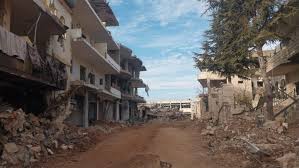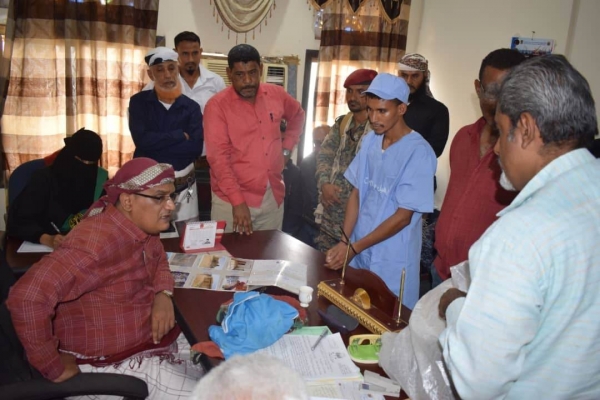
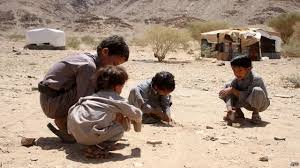
Senior UN officials have warned that routine childhood immunization rates have dropped by 40 percent in some parts of Yemen, potentially leading to outbreaks of diseases like polio and measles. This reflects the increasing collapse of public services in the country, which is teetering on the brink of a humanitarian catastrophe. Geert Cappelaere, UNICEF’s representative in Yemen, told reporters in Geneva earlier this week, “Yemen is on the verge of a real humanitarian disaster. Hundreds of thousands of people are joining the ranks of the food-insecure every day.” Cappelaere and his counterpart from the World Food Programme, Lubna Alman, painted a grim picture of the situation in Yemen, which they described as “chronically underdeveloped.” Yemen has the second-highest rate of chronic malnutrition in the world after Afghanistan, and nearly half of its population lives in extreme poverty. More than half of its children under the age of five suffer from chronic malnutrition. According to UNICEF, preliminary findings from a nutritional assessment conducted in September in Abyan Governorate, which has been the scene of ongoing clashes between government forces and Islamist militants since May 28, showed that the prevalence of acute malnutrition in Yemen has reached 18.6 percent, exceeding the emergency threshold. Of this total, 3.9 percent suffered from severe acute malnutrition and 14.7 percent from moderate malnutrition. In Saada, a growing prevalence of malnutrition continues to be observed, with more affected children being referred for treatment. In this context, Valerie Amos, UN Under-Secretary-General for Humanitarian Affairs and Emergency Relief Coordinator, stated that factors such as conflict, poverty, drought, rising food prices, and the collapse of state services have created a daily struggle for survival for millions of Yemenis, including 100,000 people displaced by recent fighting in the south, thousands of refugees from the Horn of Africa, and 300,000 people displaced by previous conflicts in the north. She added: “It will take many months, and in some sectors, many years, to undo the enormous impact of the last few months. A political agreement is not an end in itself for the humanitarian community, but merely one factor in addressing the enormous humanitarian needs.” According to Valerie Amos, in a statement on October 11, one in three children in some parts of the country suffers from malnutrition, making Yemen’s malnutrition rate one of the highest in the world. The few hospitals and clinics still functioning are often overwhelmed, access to safe water is becoming increasingly difficult, and schools have closed their doors to tens of thousands of children. Lubna Alaman commented, “It is very clear: the humanitarian situation is deteriorating very rapidly.” On October 21, the UN Security Council urged Yemeni President Ali Abdullah Saleh to step down in a non-binding resolution unanimously adopted by its 15 members, endorsing the Gulf Cooperation Council’s mediation plan to end Saleh’s 33-year rule. The Council also condemned violations Human rights and the excessive use of force by Yemeni authorities against peaceful demonstrators, as well as acts of violence by other groups, were discussed. The Council stated that hundreds of people, mostly civilians including women and children, had been killed as a result of the violence in recent months. Jamal Benomar, the UN Special Envoy to Yemen, reported that the security situation in Yemen had deteriorated significantly, with five or six governorates falling outside government control, a large area in the north under the control of the Houthi rebels, al-Qaeda militants controlling three cities and a significant geographical area in the south, and the capital, Sana’a, divided between rival factions. Dali Belgasmi, the UN World Food Programme’s Regional Director for the Middle East, said: “We need an immediate ceasefire by all parties to the conflict and to work towards a political solution for the transition, in line with the Security Council resolution.” What we really need is humanitarian stability, a political solution, and support for recovery efforts.” UNICEF and WFP officials stressed that the road to recovery will be slow and arduous. Cappelaere believes that “it will take many months, and in some sectors, many years, to undo the enormous impact of recent months. A political agreement is not an end in itself for the humanitarian community, but merely one factor in addressing the massive humanitarian needs.” Geneva, 27 October 2011 *From the Humanitarian News Network (IRIN) United Nations Office for the Coordination of Humanitarian Affairs (OCHA)