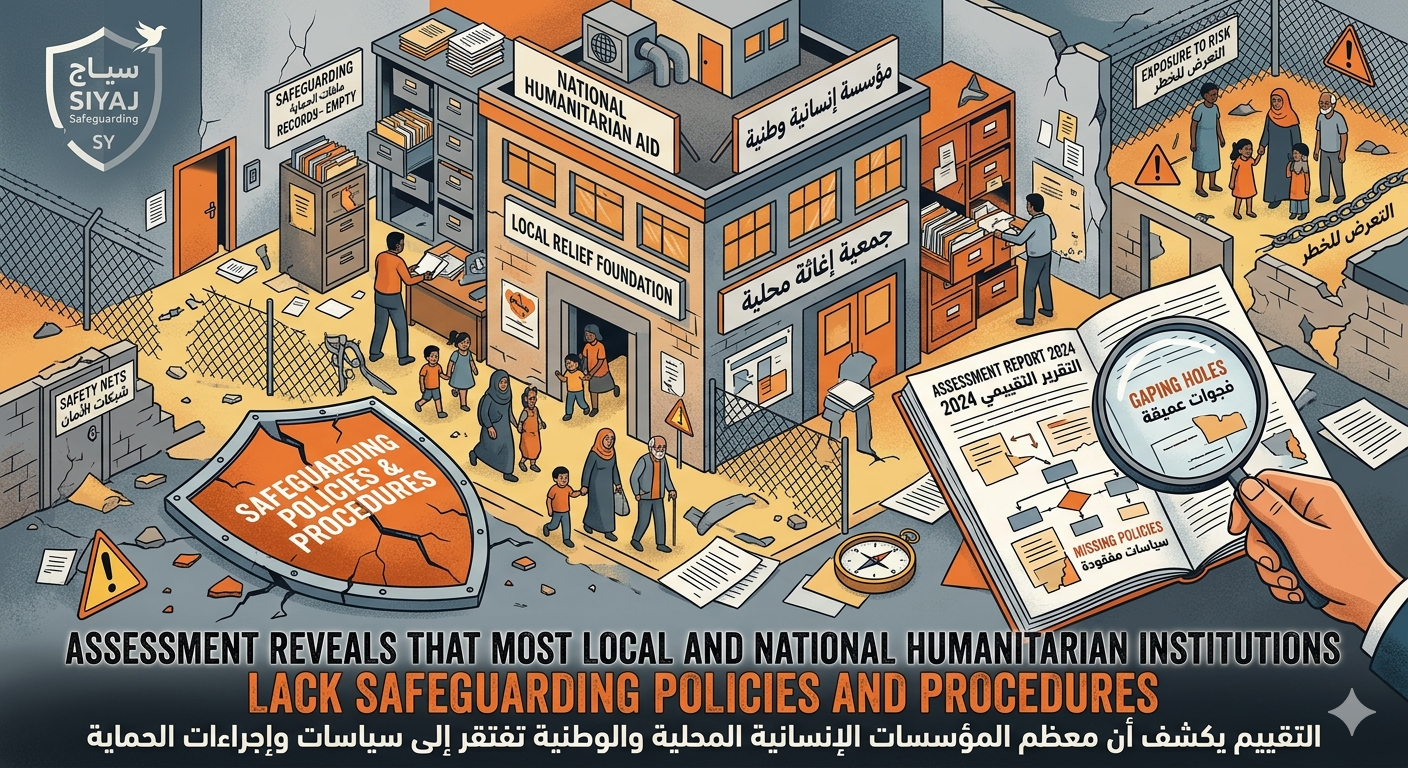
A recent assessment revealed that humanitarian institutions lack policies and procedures that protect their staff and beneficiaries from harm during the delivery of humanitarian assistance.
According to the findings of the assessment carried out by Seyaj Organization for Childhood Protection in cooperation with Tamkeen Youth Foundation to identify the safeguarding policy and procedure needs of civil society organizations working in humanitarian action in Marib, 93.3% of local humanitarian institutions do not have safeguarding policies and procedures to prevent harm during the provision of aid. This includes preventing sexual exploitation, abuse, and harassment (SEAH) and responding to survivors.
The assessment showed that 84.4% of organizational leaders, staff, and volunteers had never received training or awareness on such policies, and that 75.6% of institutions lack mechanisms to receive reports and investigate any violation committed by staff or aid beneficiaries.
While 95.6% of respondents affirmed the importance of having and implementing safeguarding policies and procedures, only 6.7% of institutions had conducted a safeguarding risk analysis. All respondents, representing 100% of the leadership of participating institutions, confirmed that their institutions need to develop safeguarding policies and procedures.
The assessment concluded that these gaps expose humanitarian workers, beneficiaries, and local institutions to the risks of SEAH and its serious consequences, especially for vulnerable and highly at-risk groups such as women, girls, and children. In a conservative environment, the lack of such policies and good awareness of them also deprives many girls of opportunities to work in the humanitarian sector, compounding their hardship, particularly as many women and girls support their families after losing breadwinners because of armed conflict.
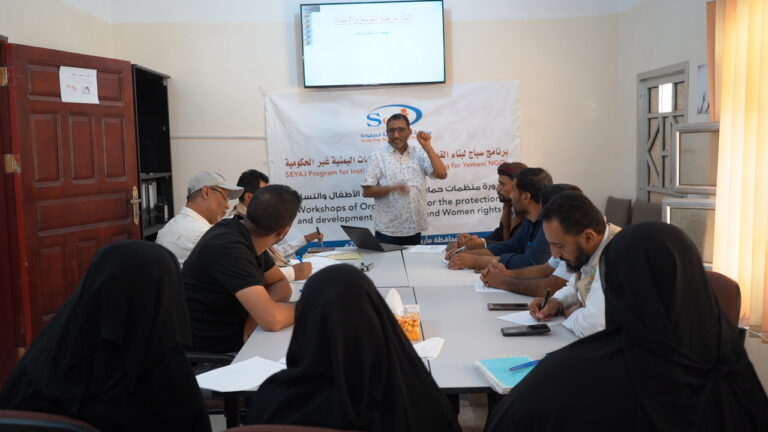
Forty-five leaders and executive managers of local organizations in Marib, 31% of them women, participated in the assessment. It was produced through a partnership between Seyaj and the Safeguarding Resource and Support Hub for the Middle East and North Africa, as part of a capacity-building program for local and national organizations specialized in child and women’s rights protection and development.
Safeguarding is understood as preventing harm to people and the environment during humanitarian and development action.